Tigers die and leave their skins; people die and leave their names.
Japanese Proverb
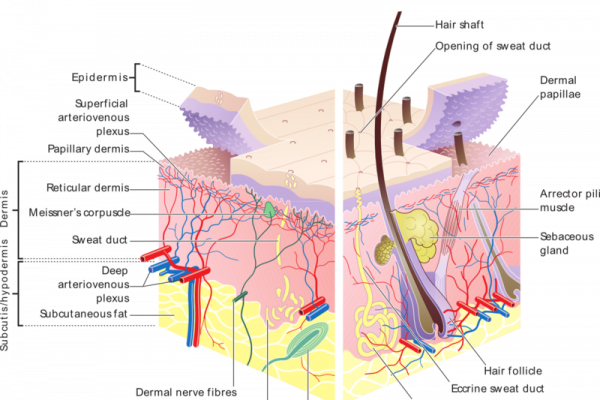
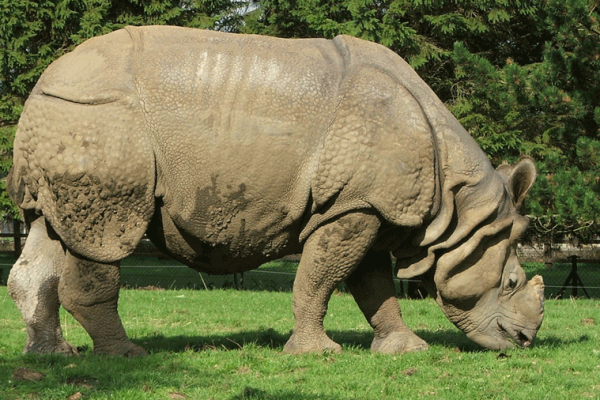
Skin is composed of an outermost epidermis (Gr. epi; on, derma; skin) followed by the dermis and then the subcutaneous layer containing fat cells. Thickness varies on different parts of the body; palms and soles (1.2 mm to 4.7 mm) have the thickest skin while the thinnest is found on the eyelids and lips (~0.05 mm). Males generally have thicker skin than females and it is the Rhinoceros that has the thickest skin of any terrestrial mammal with some areas as thick as 2.5cm.
The epidermis is composed mainly of keratinocyte (Gr. cyte; hollow – nowadays translates as a cell) and melanocyte cells, while the dermis contains blood vessels, nerves, hair follicles, muscle, glands and lymphatic tissue. Each square cm of human skin can consist of up to four million cells, 24 hairs, 35 oil glands, 6.1 meters of blood vessels, 246 sweat glands, 7,480 sensory cells, 23,622 pigment cells, and more than 393 nerve endings.
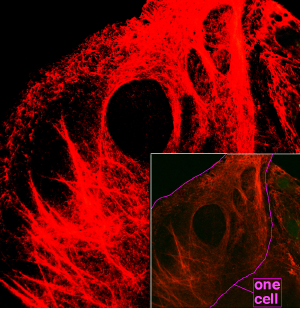
Keratinocytes produce strong structural proteins called keratins (Gr. keras; horn), that enable the cell to keep a robust rigid structure, and are also the main component of nails, hair, feathers and horns (this is seen as the red filaments in the above photo of a single cell). There are over 30 different types of keratin proteins defects in which can lead to skin either becoming to hard (Ichthyosis) or too delicate (epidermolysis bullosa). As the keratinocytes develop, they move up the skin layers producing different types of these keratin proteins forming rigid scaffolds in the cells. As the cells reach the layers of the stratum corneum they die forming the dead cell layer of our outermost skin. An increase in this process occurs in psoriasis.
Skin forms from the ectoderm during early development. Defects in this can lead to an absence of associated structures such as hair, nails, teeth and sweat glands (ectodermal dysplasia), nerve cells (congenital insensitivity to pain) or can lead to the development of lesions and tumours (neurofibromatosis, tuberous sclerosis and proteus syndrome).
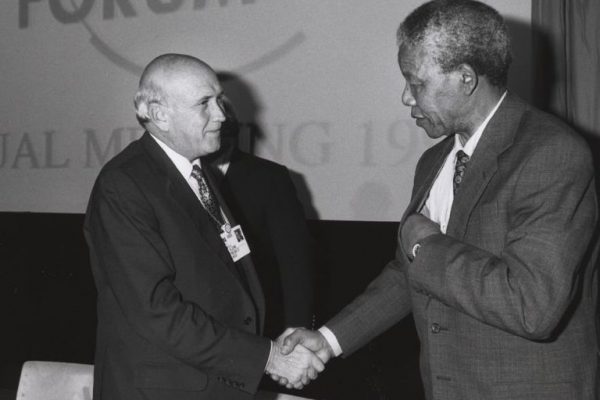
Skin colour is chiefly the result of differing amounts of the pigment melanin (Gr. melas; black). This forms in little packets called melanosomes in a special cell called the melanocyte. These cells are found in the skin, eye and hair follicles and contain many branches which are used to pass the melanosome pigment packets they produce on to keratinocyte cells. These keratinocytes then store the melanosomes over their nucleus where the pigment serves to absorb harmful ultraviolet radiation preventing it reaching the DNA of the cell and causing mutations.
Pigment disorders can be caused by mutations in a variety of genes leading to defects in either: 1, the production of melanin (oculocutaneous albinism); 2, formation of melanosomes (Hermansky-Pudlak syndrome and Waardenburg syndrome); or 3, the development of melanocytes (piebaldism) or the loss of melanocytes in later life (virtiligo).
ICTHYOSIS
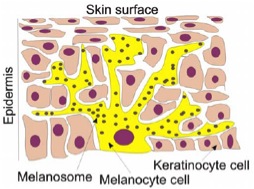
Ichthyoses (Gr. ichthys; fish) results from an overproduction of skin keratin leading to very thick and tough scaly skin that can sometimes vaguely resemble the scales of a fish.
Ichthyosis vulgaris (Lat. vulgaris; common) is the most common form and is caused by the lack of a structural protein filaggrin in the epidermis.
EPIDERMOLYSIS BULLOSA
PSORIASIS
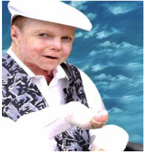
The human skin generally sheds itself at a rate of about a million cells every 40 minutes, however, this process accelerates in conditions of excessive keratinocyte proliferation such as in psoriasis (Greek, psora; itch), resulting from a hyperactivity of the immune system. A number of different genes, which regulate the immune system, are suspected of causing the disease leading to an autoimmune reaction.
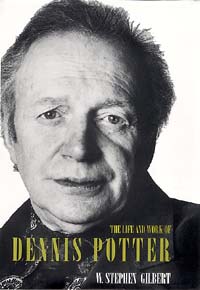

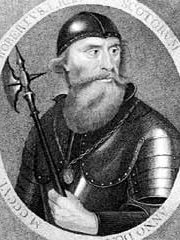
Jason Donovan and Art Garfunkel have also publically acknowledged suffering from the disease while Robert the Bruce and Joseph Stalin are also widely suspected to have had psoriasis.
ECTODERMAL DYSPLASIAS
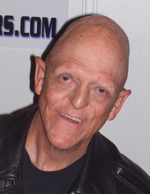
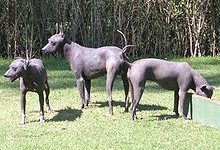
Ectodermal Dysplasias (Gr. ecto; outside, derma; skin, dysplasia) are characterised by a lack of teeth, hair, sweat glands and nails. The most common form is X-linked Hypohidrotic ED (Gr. hypo; reduced, hidrotic; sweating), caused by mutations in a gene on the X chromosome coding for a protein controlling the development of ectodermal (the ectoderm is the outermost of the three layers – the other two being the mesoderm and endoderm – that make up the very early embryo).
CONGENTIAL INSENSITIVITY TO PAIN WITH ANHIDROSIS
Autosomal recessive
rare
The skin containing millions of nerve endings that in insensitivity to pain with anhidrosis (CIPA), are disrupted rendering individuals insensitive to sensations such as pain and temperature.

NEUROFIBROMATOSIS
TUBEROUS SCLEROSIS
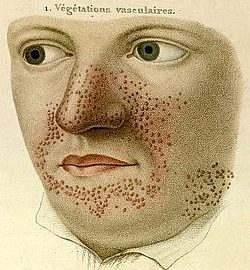
Tuberous sclerosis (Tubor/root-like growths in the brain that become sclerotic, i.e. calcified and hardened), results in benign tumours developing in the brain and the skin.
The widely respected French physician Désiré-Magloire Bourneville first described this disease in 1880.
PROTEUS SYNDROME
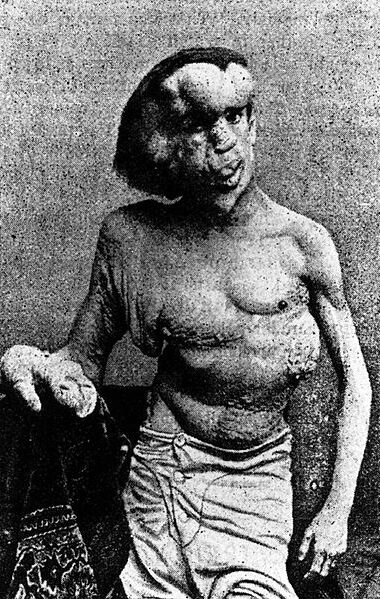
Proteus syndrome (Proteus; Greek God of the sea with an ability to change shape) results in children, whom are usually born normally, developing tumours, in the form of skin and bone growths, as they age. Some studies suggest a role for a particular tumour suppressor gene and familial cases of the disease do appear to exist.
OCULOCUTANEOUS ALBINISM
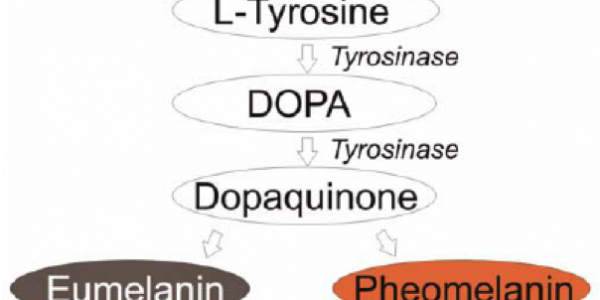
There are two types of melanin; the dark coloured eumelanin (Gr. eu; true) and the red-yellow pheomelanin (Gr. Phaios; brown/dusky). Both of these are formed from the amino acid tyrosine in a biochemical pathway involving a number of steps where one compound in a pathway is converted to the next compound by the action of an enzyme.
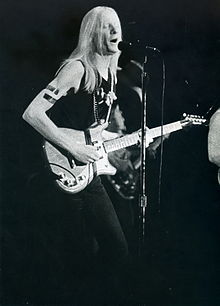

Absence of either or both types of melanin lead to oculocutaneous (Lat. oculus; eye, cutis; skin) albinism (Lat.albus; white) (OCA). A complete lack of eumelanin and pheomelanin causes OCA1A where individuals are born with white skin and hair, and blue eyes, which remain throughout life. Photographs suggest that the musical brothers, Edgar and Johnny Winter, may have both inherited this form of albinism.
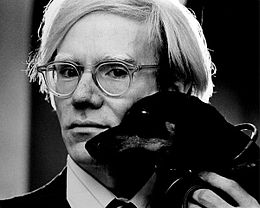
Mutations that only reduce melanin production, known as OCA1B, result in only little pigment at birth but the development of yellow hair as they age. Some mutations lead to the production of melanin only in cooler areas of the body, such as arms and legs, while warmer parts of the body, such as under the arms and the scalp, remain white. Some photographs of Andy Warhol (photo by Jack Mitchell) seem to suggest he may have had this.
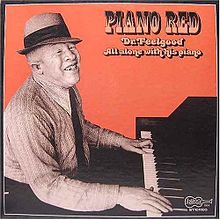
Individuals with OCA3 are only able to produce the red pheomelanin and therefore have a reddish skin, ginger/red hair, and brown eyes. This is quite common in the South African population where it is known as “Rufous” or “Red OCA”. In the first book of the Bible a description of Esau suggests that he may have been born with this form of albinism. And the first came out red, all over like a hairy garment; and they called his name Esau, Genesis 25:25. The American blues musician Piano Red (aka William Lee Perryman) achieved his name due to this disorder.
The most common type albinism is OCA2, resulting from mutations in a gene producing a protein involved in transporting molecules into and out of melanosomes. Caucasians with OCA2 show white to yellow hair, blue-grey eyes, and white skin that does not tan on sun exposure while darker-skinned individuals generally also show yellow hair and light brown skin colour. The stage name of the Jamaican-born reggae star Yellowman (aka Winston Foster) may well have derived from him having this form of albinism.

HERMANSKY-PUDLAK SYNDROME
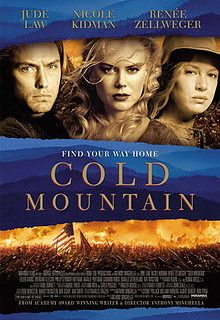
Hermansky-Pudlak syndrome results from mutations in genes producing proteins responsible for the production of melanosomes and similar organelles used to store blood clotting chemicals in platelets.
Bleeding disorders generally never appear with albinism except in the very rare Hermansky-Pudlak syndrome, which is why it is interesting that in the movie “Cold Mountain”, there is a villain with albinism who, in addition to the white makeup and bleached hair, suffers frequent nosebleeds.
PIEBALDISM
Piebaldism (Latin for magpie describing the black and white patches) is characterised by distinct patches of skin and hair lacking pigment.
This results from defects during embryonic development, of the migration of cells from to the skin where they divide to produce melanocyte cells.
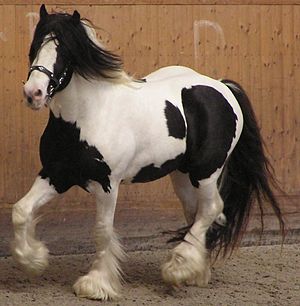
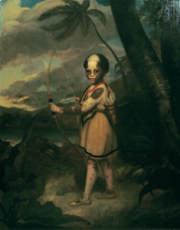
One famous case is that of George Alexander Gratton, who was born in 1808 on the Caribbean island of St Vincent. He was “purchased” as a baby by John Richardson to work in his circus. However, he treated him like his son and was distraught when the boy died later in childhood and had him buried at the All Saints Church in Marlow (UK) in the same vault in which he himself was later interred.
Piebalism can often present as very discrete depigmented patches of skin and hair. Autosomal dominantly inherited, generations with familial marks such as a white forelock have sometimes carryied surnames as Whitlock, Horlick, and Blaylock. British politicians and brothers, David and Ed Miliband for example appear to both present with such a hypopigmented tuft of hair in a smilar area towards the front of the head.


VITILIGO
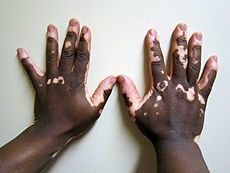
In vitiligo (Greek. vitelius; calf, describing white patches on a cow) occurs when there is a destruction of melanocyte cells though an autoimmune reaction leading to a patches of skin with a loss of pigment. This generally appears in adulthood but does not follow a simple inheritance pattern suggesting the involvement of a combination of multiple genes in addition to environmental factors.
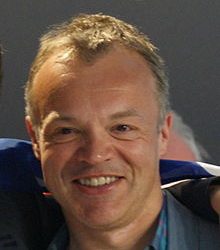
Though vitiligo is often unnoticeable on Caucasian skin (for instance, the Irish comedian Graham Norton’s disease is not so obvious on the screen), on darker-skinned people it is much more obvious.
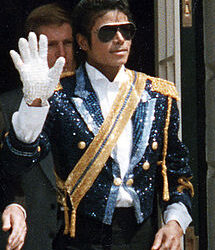
This condition affected Michael Jackson, his father and paternal grandfather. Such melanin-free patches of skin are sensitive to the sun, forcing him to cover up outside.
Vitiligo appears to have formed the basis of a number of interesting stories through the ages. One such story is of a Black slave in the 1700s who, unusually with this condition, turned completely white in a short space of time even developing blond hair and consequently becoming accepted by the white population who granted his freedom.