LADY BRACKNELL: . . . Do you smoke?
JACK: Well, yes, I must admit I smoke.
LADY BRACKNELL: I am glad to hear it. A man should always have an occupation of some kind. There are far too many idle men in London as it is.
Oscar Wilde, The Importance of Being Earnest
Lungs deliver oxygen to the body, remove carbon dioxide waste, regulate temperature and stabilize blood pH balance.
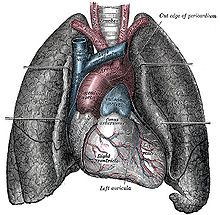
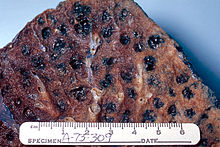
To prevent lung tissues from drying out and to prevent infections, mucus is produced consisting of proteins, salts and immune system components suspended in water. Increased mucus production in the respiratory tract is stimulated in response to many diseases, such as the common cold. However, one disease called cystic fibrosis results in the mucus becoming too viscous, therefore impeding breathing.
The lungs also contain white blood cells which release a powerful enzyme called elastase which breaks down invading pathogens but not the normal lung tissues which are protected by a second protein called alpha-1-antitrypsin. However, disruptions to this second protein can lead to lung damage and emphysema known as alpha-1-antitrypsin deficiency. Smoking also inhibits alpha-1-antitrypsin.
A further inflammatory lung disease known as sarcoidosis occurs when the immune cells collect and damage specific areas of the lungs.
Cystic Fibrosis
Cystic fibrosis (CF) is the most common autosomal recessive disorder in Europeans affecting around 1 in 2,500 births in the UK. It leads to a disruption in the passage of chloride (which, along with sodium, makes up salt) into and out of the cells leading to dehydration and thickening of the mucus. This thick mucus then clogs the lungs causing breathing problems and infections and also impairs the ability of the intestines that depend upon mucus to aid digestion.
A superstition in the Middle Ages held that infants with salty skin were “bewitched” as they would routinely die an early death – it was a common practice to lick the forehead of a child to taste for the presence of salt and the occurrence of this disease.
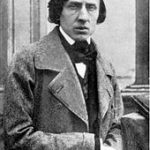
Frédéric Chopin is thought to have suffered from this. His frail health started early in childhood with recurrent diarrhoeas and gastro-intestinal ailments resulting in weight loss, and frequent respiratory tract infections. He would often be confined to his bed for long periods, from where he would give his piano lessons in a lying position. An hereditary basis to his disease seems to be supported in that Frédéric’s father had recurrent pulmonary ailments, and of Chopin’s three sisters, two also suffered from respiratory problems with one dying at a young age.

British singer-songwriter, Alice Martineau suffered and died from cystic fibrosis at the age of 30, shortly after releasing her debut album in 2002. Thinking that her condition would prevent her from singing, Alice did not at first pursue her musical ambitions but she later discovered that her constant coughing had actually strengthened her vocal chords. Before she died she took part in a documentary about CF that was broadcast in 2005.
Alpha-1 Antitrypsin Deficiency
Autosomal recesive
1:625-2,000
Lungs contain white blood cells which release a potent enzyme called elastase to breaks down protein of pathogens. To stop this enzyme also attacking lung tissue, our lungs produce alpha-1 antitrypsin that inactivates the elastase in the immediate vicinity of the lung tissue. Inheriting mutations in the alpha-1-antitrypsin gene can lead to a shortness of breath appearing between the ages of 20 and 40 years and the development of emphysema (Gr. emhysan; inflate) caused by destruction of lung tissue.
Some toxins, such as cigarette smoke, directly inactivates AAT so speeding up the process of elastase induced lung damage. People with different mutations in the AAT gene can therefore have differing degrees of susceptibility to toxins such as tobacco.
This genetic link might have been responsible for the pattern of smoking related illnesses in the family of Richard Reynolds, one of founders of the cigarette industry. After years of smoking he died of emphysema, followed by two of his four children, and many subsequent family members who also smoked.


In 2008 Amy Winehouse was diagnosed at the age of 24 with emphysema. Even though she smoked heavily, her very young age has led to some speculation that she may have some level of alpha-1-antitrypsin deficiency, though this is certainly not proved.
This phenomenon of inherited susceptibilities to certain toxins has been a issue in a number of court cases. In the 1970s the Dow Chemical Company started testing prospective employees for AAT deficiency claiming to try to protect prospective AAT deficient employees from industrial pollutants. The union argued that the testing was an unfair labour practice and maintained that the onus should be on the industry to make the workplace safe for everyone, regardless of their AAT status. The company subsequently discontinued the tests.